
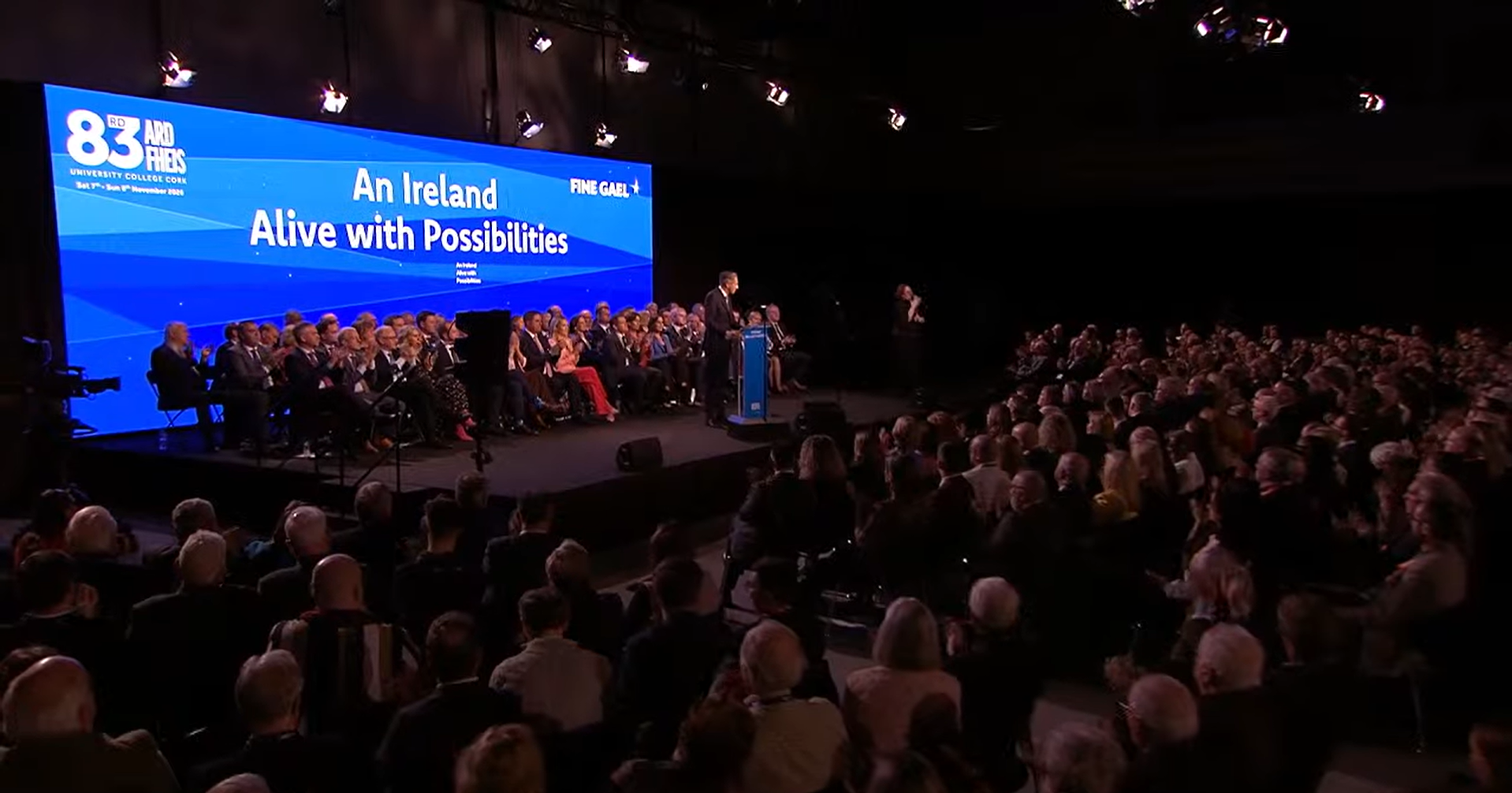
- Fine Gael promised a blueprint for a united Ireland but has instead proposed a Constitutional Forum, effectively producing a blueprint for more blueprints.
- Fundamental questions about the institutions of the state, the NHS, taxation, welfare, policing, defence and security remain totally unanswered.
- Its own economic calculator puts the 25-year cost of unity anywhere between €101 billion and €838 billion, demonstrating how heavily the proposition depends on the fantasy assumption of the UK taking on responsibility for pensions and NI’s share of the UK national debt.
- With 2% annual growth in Northern Ireland, none of the unification models examined repays its transition borrowing within 25 years.
- Renew NI argues there can be faster and better change on the key policy challenges facing Northern Ireland, instead of undertaking a massive constitutional upheaval.
Renew NI has described Fine Gael’s paper on a united Ireland as a “blueprint for more blueprints”. The organisation argues Fine Gael has failed to confront the fundamental choices and trade-offs involved in changing Northern Ireland’s constitutional position, and simply proposes mechanisms to further discuss these issues.
The paper had been billed by Fine Gael leader Simon Harris TD as a blueprint for a united Ireland, intended to define what it could mean in practical terms. But despite those ambitions, Fine Gael has produced a paper which kicks the can down the road on all the big issues.
The economic analysis, published alongside the report, models first-year Exchequer costs ranging from approximately €3 billion to €25 billion, depending on the model, the UK-Ireland settlement on pensions and debt, and harmonisation assumptions.
Under the report’s “Managed Integration” model, Fine Gael’s own blueprint records a first-year cost of €4 billion to €4.7 billion under the fantasy assumption that the UK takes on responsibility for pensions and NI’s share of UK debt. This rises to €13.6 billion to €14.2 billion under the realistic scenario that Ireland would have to assume them.
With the UK paying for pensions and keeping NI’s share of UK debt, the modelling still records a united Ireland’s total debt reaching 110.5% of Gross National Income (GNI) after 25 years in the upper harmonisation case. Under the realistic scenario that the UK doesn’t take responsibility for pensions and debt, a united Ireland’s debt rises sharply to 160.5% of Gross National Income (GNI).
At 2% annual economic growth in Northern Ireland, no model repays its transition borrowing within 25 years. The modelling estimates that repayment on favourable terms requires roughly 2.9% to 5.4% annual growth in Northern Ireland, depending on the model and harmonisation assumptions.
The economic analysis shows just how large the gamble would be. Fine Gael has modelled how constitutional change could be afforded based on unrealistic growth assumptions, without setting out a convincing strategy for delivering that under a united Ireland.
For a document supposedly concerned with the practicalities of constitutional change, fundamental questions remain unanswered about the institutions of the state, the NHS, taxation, welfare, policing, defence and security.
Fine Gael promised answers to those difficult questions. Having reviewed the paper, Renew NI believes it has failed to provide them.
Grant Warren, Head of Research & Policy at Renew NI, said:
“For all its talk of reconciliation, economic opportunity, constitutional preparation and building a shared future, Fine Gael avoids making decisions on fundamental questions about what abolishing Northern Ireland would actually mean.”
“It offers no settled constitutional model, no detailed plan for integrating healthcare, taxation and welfare systems, and no clear explanation of how policing, defence and national security would operate in a united Ireland.“
“Perhaps most revealing is the accompanying economic research. Fine Gael’s own modelling puts the additional 25-year cost of unity anywhere between €101 billion and €838 billion, depending on the assumptions made. Its central scenario relies on the UK Government taking on responsibility for pensions and NI’s share of UK debt, which is nothing less than wishful thinking.”
“It is easy to talk about unity as an abstract aspiration. It is much harder when someone has to put a figure on the bill and decide what happens to the NHS, taxation, welfare, the flag, the anthem, and the institutions of the state.”
“Fine Gael has argued there are opportunities to deliver improvements to Northern Ireland’s economy and public services, but has failed to demonstrate why constitutional change is necessary to realise them. You can have change on key policy issues within Northern Ireland, rather than having a big constitutional upheaval.”
“Having promised a blueprint grounded in practical reality, Fine Gael has simply produced a blueprint for more blueprints. That might play well at their Ard Fheis. It isn’t a serious plan for Northern Ireland’s future.”